
Senior leaders of Cornerstone Housing for Women and Belong Ottawa, diocesan Community Ministries, can now say they have walked a mile in the shoes of the vulnerable people facing homelessness who they serve.
They participated with about 60 other front-line providers in the Empathy Project, described by the organizer, Alliance to End Homelessness Ottawa, as an exercise in social policy education.
Each one assumed a persona—a person who needed help from multiple service providers—which was fictional but was expertly designed to reflect real-life experience.
They were given a list of service locations such as Service Ontario, a health care clinic and community housing service which were scattered around a multi-storey building of the Canadian Mental Health Association.
At the end of the exercise, some of their comments were: “meaningful and memorable…unsettling…very powerful… profound…overwhelmed at how awful it is…”
“The Empathy Project challenges participants to engage with the realities of navigating a complex and often dehumanizing system,” Moira Alie, chair of the Bishop’s Panel on Housing Justice, said. “Though the experience can be frustrating, its purpose is not to foster hopelessness, but to inspire action. If homelessness is a systemic problem, it is also a solvable one.” Alie is engagement manager at the alliance.
Mark Holzman, chair of Cornerstone’s board of directors, stepped into the situation of an Inuit man who had been living with his son and mother in Ottawa for two years, doing well enough to rent an apartment. Until, one day he was evicted, informed that the landlord was going to renovate. He was out on the street.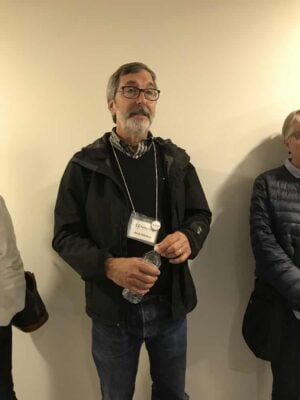
“I went to register on the housing list and was told it’s a six-year wait…There were a lot of people waiting at the shelter. Often the answer was, ‘No…no, we can’t help you, you need to go over there…no, you aren’t going to be helped today.’ That was unsettling.”
Holzman pointed out that in the simulation the “clients” had to walk up and down stairs to locations in a multi-storey building. In reality they would have to take a bus. And sometimes their first problem is getting bus tickets.
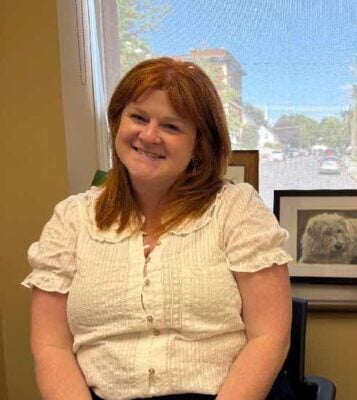
Anne Marie Hopkins, executive director of Cornerstone, assumed the role of Charles, a young immigrant refugee trying to get into a shelter and in need of disability support.
“I was not able to get my birth certificate because I didn’t have $35 to pay for it. Because of that I’m not able to get onto disability and get some income to get housing.”
Hopkins said it was a realistic reflection of the barriers that folks at the shelter face regularly. Cornerstone has a fund to help with issues like getting a birth certificate, and staff will accompany people to help them access services properly.
Shauna-marie Young, executive director of Belong Ottawa, stepped into the persona a black woman, a recent arrival to Canada who didn’t have her documents in order. She became ill, had to be hospitalized, losing her children to foster care. Upon discharge she struggled to find income and housing so her children could be returned.
As she walked from agency to agency, she found abject rejection, a lack of real support, a fatigue on the part of the providers when they had nothing to offer. “Imagine losing your children to care and being told, ‘There’s nothing I can do to help you. No, you can’t see your children’…Being in receipt of no, no, no, as kindly as it’s said, it’s still no, no, no.”
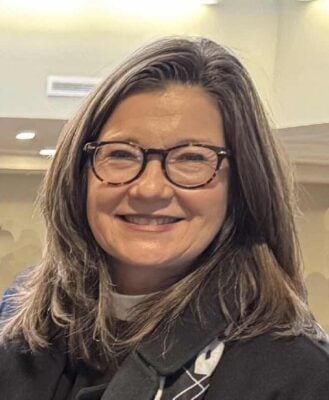 The Rev. Victoria Scott, a member of Belong Ottawa’s board of directors who has just been appointed as the director general for Anglican Community Ministries, was Charles, a 17-year-old who had been bounced around in foster care, suffered abuse and ended up on the street.
“Without any money, ID or connections other than a local shelter, I had to make my way through a day of navigating the system: going to Service Ontario to be told that I couldn’t apply for a birth certificate without the fee. I then went to the ODSP (Ontario Disability Support Program) office to be told I couldn’t apply without ID, an address and bank statements. I reached out to a landlord to be told I couldn’t apply for an apartment without proof that I was receiving ODSP. I went to the employment office to find a line so long that I had to leave in order to get back to the shelter to sign in before 4 pm.”
Scott said she knew people in similar situations when she was incumbent at St Luke’s, with its St Luke’s Table drop-in centre. She was impressed by an approach that encourages empathy. “I often think there is a misconception that the church borrows social justice from politics but it’s gospel-based. It’s our baptismal vows. It’s what Jesus did.”
Simon Kinsman, newly-appointed chair of Belong Ottawa’s advisory board, assumed the persona of a single mother, struggling to support her own ailing mother and a son facing “renoviction.”
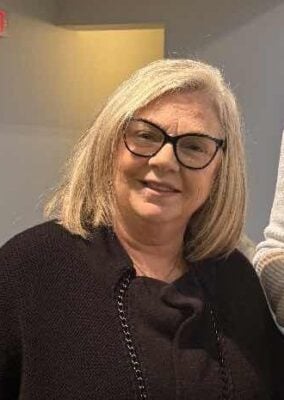
She had been managing financially but had to take unpaid time away from her work, spending days at the offices of service providers. She herself ended up being illegally evicted and turned to the emergency shelter for help.
“What stood out for me,” Kinsman said, “was how discouraging and even dehumanizing it is to be told no constantly. People facing homelessness continue to face life’s other challenges — a sick parent, job insecurity, without the safe space to rest and without a support network.”
“It made me incredibly proud of the work Belong Ottawa and the Anglican ministries do in providing that safe space.”
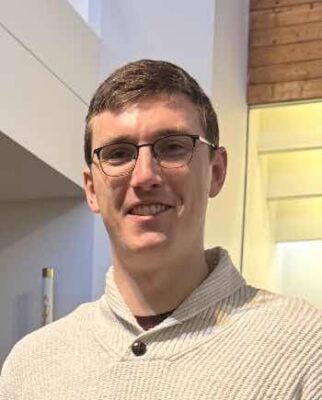
Kinsman said the project is valuable for the decision-makers to better understand how the system they have designed is experienced by the people who use it.
That’s the goal of Alliance to End Homelessness Ottawa. It has been taken up by Ottawa and Pembroke city councils and is offered to medical and nursing students, anyone considering a caring profession, including teachers.
Raising awareness of how the system actually works is seen by all as a big step forward in reducing homelessness.
As Mark Holzman said: ”We hope the people making the rules can experience what it’s like. Do they really need all that information before they can provide a service? If you’re telling your story over and over again…Is there not a way to simplify that process?”
Cornerstone chair Mark Holzman (top), Cornerstone executive director Anne Marie Hopkins and Belong Ottawa’s Shauna-marie Young stepped into the shoes of homeless persons this winter. Jesus Homeless, by Timothy Schmalz.
Cathedral Deanery — Wallis sketching Christ Church Cathedral West Window Cartoon