
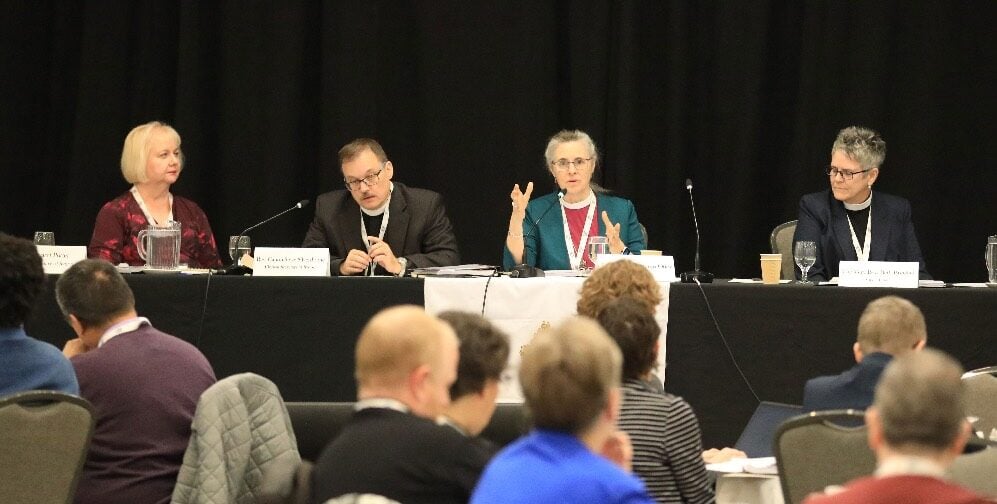
Following the Choral Eucharist at Christ Church Cathedral on the evening of Oct. 22, Bishop Kathryn Otley called the 147th Synod of the Anglican Diocese of Ottawa to order on the morning of Oct. 23 at the St. Elias Centre in Ottawa. Here are some highlights from the sessions and presentations.
Community Ministries
The Rev. Canon Victoria Scott was appointed as director general of Anglican Community Ministries in February 2026, following the retirement of the Rev. Canon Peter John Hobbs. Describing her first months in the role, Scott said, “It’s fair to say, I hit the ground running. As I’ve been listening and learning, I found myself returning to a conviction that we can do more together than we can apart. For me, this work of community ministries goes to the heart of what it means to follow Jesus. It’s about recognizing the dignity of every person, responding when people are struggling, and cultivating communities where everyone has an opportunity to flourish. I also believe that following Jesus asks us to move beyond binary choices, beyond either/or, beyond us and them. It asks us to stay curious and open to what we can’t yet see clearly and to trust that God is at work in the uncertainty, opening up possibilities we might not yet be able to imagine.”
Scott briefly described the growth of each of the five community ministries and the urgent crisis that Belong Ottawa’s Centre 454 is facing.
- Centre 105 has grown over a few years from a simple act of welcome with coffee and Timbits to a ministry that offers hot meals, showers, laundry, social support. and connection. In 2025, Centre 105 served close to 21,000 meals. The City of Cornwall provided $50,000 in funding for first time in 2026.
- The Refugee Ministry Office – This ministry began in 1979. As a Sponsorship Agreement Holder, the Diocese supports parishes and community groups sponsoring new Canadians. Due to government reductions, the RMO is processing fewer applications than previously, but case managers Ishita Ghose and Reem Abu-Afieh have submitted more than 100 applications in recent years
- The Ottawa Pastoral Counselling Centre began as a one-person counselling ministry at Christ Church Cathedral. Today, it provides professional psychotherapy and pastoral counselling to individuals, couples, and families. In 2025, OPC provided 1,200 counselling sessions and supported close to 300 subsidized sessions through its Counselling Support Fund.
- Cornerstone Housing for Women began with just three cots in the basement of All Saints in Sandy Hill. Today, it is Ontario’s largest provider of emergency shelter and supportive housing for women and gender diverse people, supporting around 330 people each day and serving 270,000 meals last year.
- Belong Ottawa
Belong Ottawa brings together three programs with deep roots welcoming and serving the most vulnerable and marginalized in Ottawa — The Well, Center 454, and St. Luke’s Table. Belong Ottawa now has served more than 255,000 meals since June 2025. Staff also provide crisis intervention and immediate compassionate support to people in complex circumstances. Belong staff have carried out more than 13,000 crisis interventions on the street since August 2025.
Canon Scott drew particular attention to a crucial and urgent issue for Centre 454. The City of Ottawa’s funding Center 454 at its current location in the basement of St. Albans Church will end in January 2027. Belong Ottawa is asking for an extension, so that they can properly plan a transition and ensure continuity of service for the people who depend on Centre 454. She added that it is not too late to voice support for Centre 454 and asked anyone who wanted to help to talk with her or Belong Ottawa executive director Shauna-marie Young.
Partnerships
It can be difficult for parishes, individuals and as a diocesan church to discern how best to make a meaningful difference on issues such as homelessness, climate change and division across the globe, and to decide what organizations and projects to support. This is where the Diocesan Partnership Committee comes in, its chair, the Rev. Rosemary Parker, explained, outlining the committee’s three primary tasks:
- Assessing potential partners. If they fulfill the criteria, they are put forward to the bishop and Diocesan Council for approval
- Supporting diocesan liaisons who connect the diocese with the partner
- Ensuring that all partnerships are active, meaningful and visible
Committee member Kathryn Fournier said that the current 10 partners — Alongside Hope, The Anglican Fellowship of Prayer, The Anglican Foundation of Canada, The Communion Forest, The Compass Rose Society, The Episcopal Diocese of Jerusalem, The International Anglican Women’s Network in Canada, KAIROS, Multifaith Housing Initiative and Saint Paul University — are active across a whole spectrum of important issues, some global, others local. Examples of the ways parishes can engage could be fundraising for the Episcopal Diocese of Jerusalem to support the Princess Basma Hospital; planting trees locally or fundraising for an international effort through the Communion Forest; or taking part in the Tulipathon to support the Multifaith Housing Initiative in Ottawa. For more information, see the Partnership page on the diocesan website. https://ottawa.anglican.ca/what-we-do/partnerships
Education and Learning Commons
Caroll Carkner, chair of the Education Committee, shared plans to make the diocesan Learning Commons more accessible and responsive to parish needs.
- The application form for parishes wishing to share activities and resources has been simplified by the Rev. Gillian Hoyer,
- There will be a brief survey asking what resources parishes need and want, so the committee can work to find and add those resources.
Contextual Mission
Archdeacon Mark Whittall, chair of the Contextual Mission Subcommittee, reminded Synod members that three years ago, they set a goal that by 2028, every parish in the diocese would be involved with one new or renewed contextual mission initiative. Resources that have been provided to help parishes achieve their goal include: a step-by-step guide for parishes, courses from our partners in the Niagara School for Missional Leadership, in the Cente for Missional Leadership in Vancouver, coaching and facilitation, and Future Fund grants.
For those not sure how to begin, he outlined eight steps:
- Pray
- Form a team
- Do some listening in your neighbourhood or community.
- Pull the team together to generate some ideas, perhaps with the help of a facilitator.
- Try something.
- If the initiative requires money, apply for a Future Fund grant. (Application deadlines are March 15 and Nov. 1.)
- Evaluate
- Rinse and repeat. “This is not just a one-off for us. This is how we live into our mission to be followers of Christ and to proclaim God’s good news, in the neighborhoods, in the communities that we’re part of,” Whittall said.
In total, out of 50 parishes, 35 parishes have reported that they are engaged in contextual mission in some way — taking courses with a planning process or in actual initiatives.
Whittall announced plans for a Contextual Mission Symposium in the spring of 2028 that may include keynote speakers, reports from other dioceses for inspiration and practical advice. He asked for feedback on what parishes want to hear at the symposium.
The presentation offered three examples of new contextual mission initiatives:
- The Rev. Karen McBride described Julian’s Place, an outreach from Julian of Norwich to students at Algonquin College, inviting them to the parish for meals, shopping at the New-to-You and Book Nook and to walk the new labyrinth in the parish hall.
- Archdeacon Monique Stone described the Forest Church initiative from Christ Church Bells Corners, which offers a chance to worship while walking in a forest that has attracted new participants, online enquires and media.
- Carolyn Coffin-Caputo and Ron Kallio provided an update on the growth of a weekly hot meal served to those in need in Hawkesbury in Parish of the Lower Ottawa Valley
 Carolyn Coffin-Caputo Photo: The Ven. Chris Dunn
 Ron Kallio. Photo: The Ven. Chris Dunn
 The Ven. Monique Stone. Photo: The Ven. Chris Dunn
 The Rev. Karen McBride Photo: The Ven. Chris Dunn
Watch for a report on all of these initiatives in upcoming issues of Perspective.
Provincial Youth Gathering
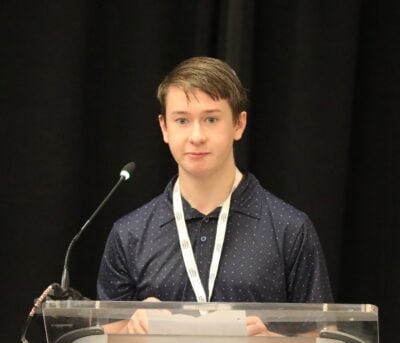
Colson Puchala, a member of the Parish of Huntley and a first-year student at Carleton University attended the first Youth Gathering for the Ecclesiastical Province of Ontario last summer. He reported that they discussed how to empower youth and amplify their voices within their parishes and in the wider church. They also began to set up the Council of the Ecclesiastical Anglican Provincial Youth Council.
All My Relations Episcopal Panel
The All My Relations (AMR) Episcopal Panel works to encourage reconciliation throughout the diocese by supporting parish and community engagement with Indigenous peoples.
Co-chair Karen Luyendyk (above) reported that last year, the 10th anniversary of the release of the Truth and Reconciliation Commission’s Calls to Action, diocesan Synod voted unanimously to renew its commitment to Call to Action #59 that calls on the churches to educate their members on the legacy of Indian residential schools.
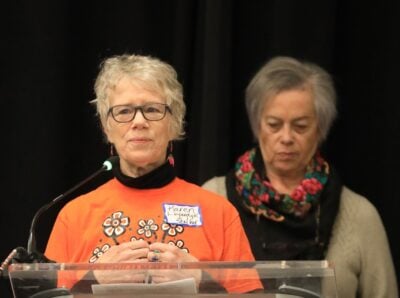
The AMR Panel surveyed parishes to learn about their reconciliation activities. Only 15 of the 38 parishes that responded reported having a dedicated Truth and Reconciliation committee or group, but there was continued interest in reconciliation efforts. Parish activities included:
- Regular land acknowledgements and wearing orange shirts.
- Special services for National Indigenous Peoples Day of Prayer and the National Day for Truth and Reconciliation.
- Inviting Indigenous Elders and Knowledge Keepers to share their wisdom.
- Book studies, film screenings, and educational activities.
- Community-based projects, including healing gardens, friendship trails, and public displays reflecting Anishinaabe teachings.
While these activities have encouraged important conversations, much of the work remains focused within church communities rather than building broader relationships with Indigenous communities. Parishes identified several needs to help them continue their work:
- More educational resources and knowledgeable resource people.
- Better connections with the AMR Panel and other parishes.
- Funding for reconciliation initiatives.
- Stronger relationships with Indigenous peoples.
- Support for Inuit-led ministry within the diocese.
AMR Co-Chair Kathryn Fournier encouraged parishes to begin identifying practical next steps within their own communities. She suggested visiting powwows and Indigenous community events, participating in Indigenous-focused exhibitions and educational programs, undertaking book studies and webinars, and appointing parish champions to lead reconciliation work. Parishes that have intentionally partnered with Indigenous communities have reported very positive experiences. The next step in reconciliation is to move beyond symbolic gestures toward meaningful relationships, shared responsibility and sustained action, said Fournier. The AMR Panel invited parishes to join its email network and access available resources to continue this journey.
Nominations Report
All of the nominations for election to Provincial Synod, Diocesan Council and the Advisory Panel on the Termination of Clerical Appointments were acclaimed. For names of all of the representatives, please check the Synod Highlights on the Diocesan website.
Centre for Anglican Studies
Canon Dr. Sarah Kathleen Johnson announced that the Center for Anglican Studies at Saint Paul University will officially launch with a public celebration on April 1, 2027. Both Bishop Kathryn Otley and Archbishop Shane Parker, Primate of the Anglican Church of Canada plan to attend. Anglican Studies has been part of St. Paul University since 1981. “Reframing the Anglican presence at the university as the Centre for Anglican Studies aims to more clearly communicate the diversity of our current community and to empower new directions for partnership and participation,” she said.
Financial Update
The 2025 audited statements were presented by Sanjay Grover, director of financial ministry.
- Total consolidated assets were $157 million for the year across the board, up about $2 million from $155 the year before.
- Liabilities went up to $131 million from $128 million the year before. The difference relates to non-church buildings owned by the Diocese such as Hollyer House and Cornerstone buildings. The asset values offset debt that we carry against those, he explained.
- Diocesan investments in the Consolidated Trust Fund (CTF) were $32 million at the end of 2025, compared to $29 million in 2024. (Cornerstone funds of $5 million are included in this figure.)
- Revenues were at $9.4 million, expenditures at $10.5 million, so there was $1 million shortfall. $900,000 was covered by unrealized market value gains in the diocesan CTF, which left a small deficit of about $100,000.
Operating Budget 2027


Archdeacon Chris Dunn, chair of the Property and Finance Committee, outlined the Diocese’s proposed 2027 operating budget. The Diocese is adopting a one-year budget for 2027. This gives the new bishop time to establish priorities before returning to the usual three-year budget cycle.
- General increase
A general 3% increase has been applied to many budget lines, based on the Consumer Price Index. Salary and benefit figures remain provisional pending final decisions.
- Parish Proportional Share (PPS)The total has increased by 3% to approximately $1.84 million, representing 40% of budget revenue. Each parish’s contribution is calculated using a three-year average of its assessable income, so individual increases will vary.
- Budget deficit
The proposed budget has a deficit of approximately $200,000 on a budget of $4.5 million. This is considered manageable and will be covered by accumulated surpluses of approximately $8–$8.5 million.
One concern raised during the presentation was that the Diocese is owed approximately $490,000 in overdue parish commitments from previous years. Because some parishes pay late or have accumulated arrears, the Diocese must sometimes borrow money to meet its own obligations. The increased borrowing costs are a major reason administration expenses have risen, with the net cost of this budget area increasing from $286,000 to $518,000.
Diocesan Capital Improvement Fund
Bishop Kathryn Otley introduced this new proposed fund explaining that in months since her election she has heard about the urgent financial challenges facing parishes that need significant repairs or improvements to their church buildings and properties. She acknowledged their frustration learning that the former Church Extension Fund could no longer provide mortgage-style loans.
The bishop explained that approximately three to four years ago, the fund was folded into the Diocese’s undesignated investments in the Consolidated Trust Fund (CTF). This change helped generate investment income to support diocesan operations, including the Episcopal Office, and reduce the financial burden on parishes by lowering parish proportional share, but loans can no longer be issued through the closed extension fund.
The bishop introduced a proposal for a new fund to help parishes manage major building repairs that the diocese aims to launch by mid-2027. Approximately $750,000 has been identified as seed funding from selected undesignated CTF trust assets. The fund is still being developed, and its final criteria have not yet been approved.
The Diocese is also exploring ways to reduce the costs and complexity of building projects by:
- Establishing relationships with qualified building assessment firms and contractors.
- Negotiating arrangements that could reduce assessment costs through economies of scale.
- Helping parishes prioritize urgent repairs and develop realistic timelines for completing projects.
- Learning from other dioceses that have established similar funds.
Archdeacon Rhonda Waters expressed some concern in a comment from the floor that there is not yet enough money in the fund. The bishop mentioned one possible avenue for increasing the fund, noting that if diocesan property is sold in the future, a portion of the proceeds may be added to the new fund to increase its capital. No motion was required at this Synod, but the proposal will be submitted to Diocesan Council.
Stewardship
Carole Breton, diocesan director of Communications and Development presented stewardship as an expression of faith, generosity, and belonging — a year-round way of living out faith, not simply an annual fundraising campaign. A thriving parish is one where people feel welcomed, valued, connected, and able to contribute with their time, talent and treasure. Small acts of care help build a sense of belonging, which encourages participation and generosity, she said.
The diocesan Stewardship Resource Hub helps parishes strengthen stewardship by sharing experiences, exchanging ideas, and offering practical support tailored to each parish’s circumstances. For example, Holy Trinity, Pembroke’s Ministry and Money Working Group shared insight from some of their successful ideas in a video posted in the Learning Commons’ “Stewardship in Action: Voices from Across the Diocese” series.
Resources and opportunities available to parishes:
- Learning Commons: provides materials under the Financial Stewardship and Management section.
- TENS (The Episcopal Network for Stewardship): The Diocese’s membership gives parishes access to pledge cards, campaign materials, and this year’s stewardship campaign.
- Legacy Giving webinar: held online on Oct. 27, a video will be posted on the diocesan website.
- Communications webinars: Upcoming sessions cover social media accessibility, photography, media relations, (Nov. 17, from 11:30 am to 1 pm) and websites (Feb 2, 2027, from 11:30 am to 1 pm). Webinars will later be posted on ADOLearningCommons.ca
- Stewardship Resource Hub: presenting another workshop planned for spring 2027.
- Anglican Foundation of Canada: Offers funding opportunities, with the next deadline mentioned as Nov. 3 for the January 1 cycle. Applications require Diocesan Council approval.
- Future Fund: offers $10,000 in funding, with deadlines of November 1 and March 15.
Ms. Breton encouraged parishes to:
- Recognize the generosity and gifts already present in their communities.
- Invite new people and perspectives into stewardship discussions.
- Establish a stewardship committee or renew an existing committee where appropriate.
- Share stories and successful practices so other parishes can learn from them.
- Contact diocesan staff for help with resources, communications, funding applications, or planning.
The Diocese’s Stewardship Resource Hub, Learning Commons, and Communications and Development team are available to help parishes put these principles into practice.
Synod Reflector:
Dr. Catherine Clifford, Saint Paul University
Dr. Clifford is a professor of systematic and historical theology. Her research focuses on ecclesiology, ecumenism, and the history of the Second Vatican Council. “I come as one who’s deeply aware that my own church has much to learn and receive from the Anglican Communion. This is especially true in the case of synodality, the practice of gathering the people of God in each local church in order to discern together what the Spirit is saying to the churches in our time,” she said.
Receptive ecumenism is a method of dialogue that has also come to characterize the work of the most recent round of Anglican-Roman Catholic international dialogue. Dr. Clifford said Pope Francis shared his appreciation for this spirit of ecumenical learning. “How many important things unite us if we really believe in the abundantly free working of the Holy Spirit, we can learn so much from one another.”
Synod Secretary (Clerical) steps down
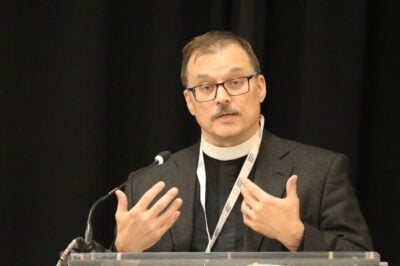
Photo: The Ven. Chris Dunn
On behalf of the Diocese, Bishop Kathryn expressed her gratitude for the Rev. Canon Stephen Silverthorne’s dedicated service as Clerical Secretary to Synod, announcing his departure from the role. Synod members gave him a standing ovation in recognition of his years of devoted and exemplary service.

Saint Stephen’s Church, Munster — Deanery of the Southwest