
The Counter-Jumper and the Church
Storekeepers in nineteenth century Canada enjoyed prominence. They were the day-to-day link for isolated families with the outside world and outside markets. Their prominence was summarized in 1836 by Catherine Parr Traill. “Though a store is, in fact, nothing better than what we should call in the country towns at home [England] a “general shop,” yet the storekeeper in Canada holds a very different rank from the shopkeeper of the English village,” she wrote. Storekeepers “are the merchants and bankers of the places in which they reside. Almost all money matters are transacted by them, and they are often men of landed property and consequence, not unfrequently filling the situations of magistrates, commissioners, and even members of the provincial parliament.”
Not everyone had such exalted views of storekeepers. John MacTaggart, an early surveyor laying out the route of the Rideau Canal in the 1820s, for one, perceived them as having pretensions to gentility, and he referred to them as counter-jumpers, saying, “I have seen a counter-jumper, alias a shopman, assume the office of reforming the manners of the age.”
MacTaggart was appalled by how storekeepers took advantage of isolated men in the Ottawa country working in lumber shanties, perceiving “the storekeepers cram their stuffs into their shanties…giving long credit” in order to rapaciously “get three times the value for them.”
MacTaggart was not done. “What is the storekeeper but a person living on [the lumberman’s] exertions,” he asked, contriving “to get him into what he calls his debt,” where “he keeps his victim, feeds, clothes, kicks, and tantalizes him to madness, making him a character far worse than he otherwise would be…but there is the sleek-shaven storekeeper, mild as a lamb, and tame as a dove, uttering delicious phrases, and, nevertheless, behaving abominably. Crafty old fellows! but we see through them. But to hear it attempted to be developed over a counter by a smart-looking fellow with a quill behind his ear, is all humbug and falsehood.”
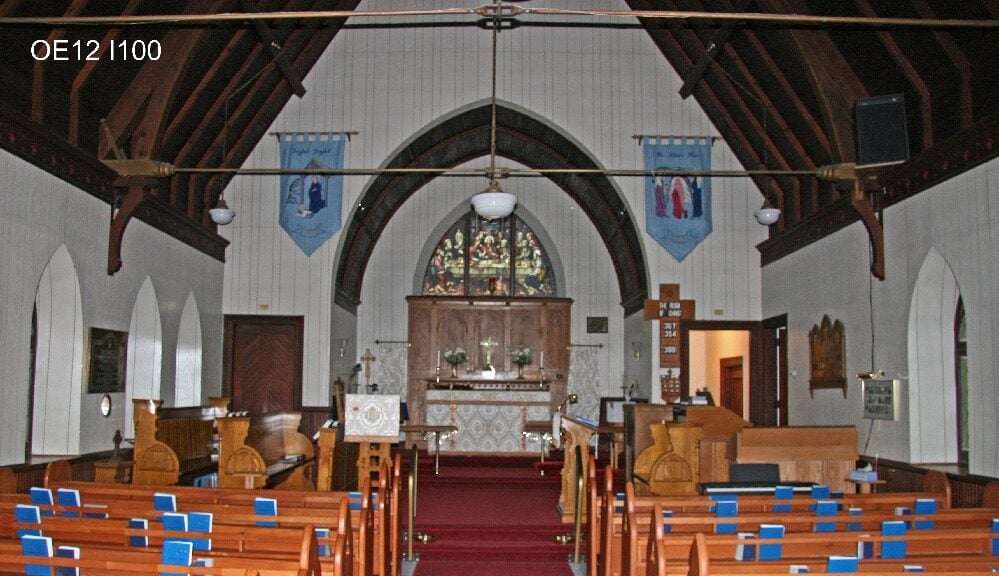
But there was another view of storekeepers, one evident in the emergence of Saint Mary’s Church at Navan, Ontario in 1867. In that Confederation year, the local general storekeeper at Navan in 1867, one Captain Visser as he was known, overheard farmers complaining about having to travel five miles to Bearbrook to attend Anglican services. Visser suggested that they build their own church, a suggestion they immediately pooh-poohed as impossible with so few families to undertake such a venture.
Undeterred, Captain Visser offered a site on land across the road from his store. Navan tradesmen caught the spirit and added their donations to a list, according to their means. For instance, there was the village carpenter, Richard Bickerton, who offered to make the pews, and later gave land for the parish cemetery. Thomas Sidney Smith, a plasterer, agreed to finish the interior walls, along with other craftsmen who offered their services to help build the church.
When preparations were made in 1898 to build a larger stone church (shown here), the original frame house of worship was moved to another location in the village, and it became the lodge hall of a fraternal group, the Canadian Order of Foresters.
The Diocesan Archives collects parish registers, vestry reports, service registers, minutes of committees, financial documents, property records (including cemeteries and architectural plans), insurance policies, letters, pew bulletins, photographs and paintings, scrapbooks, parish newsletters and unusual documents.


The Jesus Prayer and Preparing for Death