
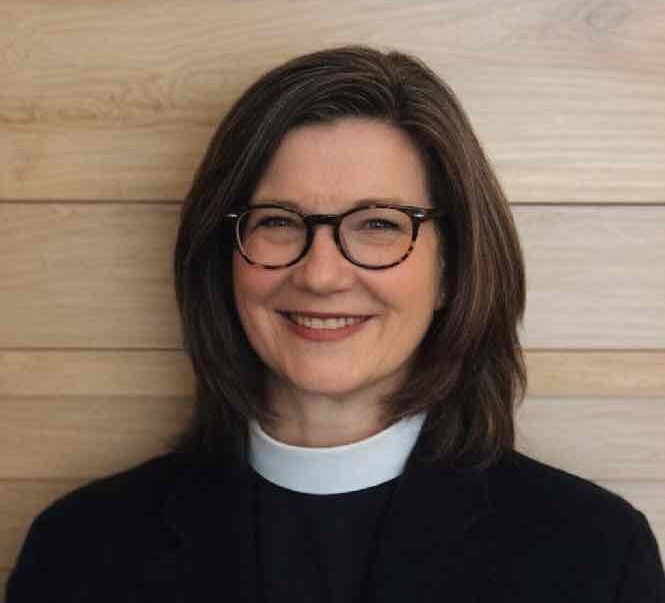
The Rev. Victoria Scott, a priest of the Diocese, was appointed as director general of Community Ministries in the Anglican Diocese of Ottawa and began her new role in February.
The Community Ministries serve some of the most vulnerable people in our midst who may be experiencing homelessness, poverty, mental illness, trauma and addiction.
The ministries include day programs at Belong Ottawa’s three locations at Centre 454, St. Luke’s Table and The Well, as well as Centre 105 in Cornwall, which offer service to address basic needs such as food, laundry and shower facilities, as well as other supports that foster dignity, wellness and hope.
Cornerstone Housing for Women provides supportive permanent housing for women and gender-diverse individuals as well as operating an emergency shelter.
The Ottawa Pastoral Counselling Centre (The OPC) offers counselling and psychotherapy to individuals, couples and families, including children and teens, and has a counselling support fund that allows the OPC to offer some crisis support to people who otherwise could not afford counselling.
The Refugee Ministry Office operates as a Sponsorship Agreement Holder in Canada’s private refugee sponsorship program that has helped hundreds of people begin new lives in Canada in its decades of service.
Supporting all of this work is a daunting balancing act with a hectic pace, but the new director general kindly took time to answer some questions from Perspective.
Now that you have had a few months to start settling in, how are you feeling about your new role?
I’m settling into the role with a growing sense of clarity about both the strength of these ministries and the challenges they are facing.
In these first months, I’ve been listening carefully—spending time with staff, volunteers, and participants and paying attention to what is working well and where there is strain. What is immediately clear is the depth of commitment across all of the Community Ministries, and the essential role they play in the life of our Diocese and in the wider community.
At the same time, the pressures are significant. Rising demand, increasing complexity of need, and financial constraints are not abstract concerns—they are shaping daily realities on the ground. That requires us to be both honest about where we are and intentional about where we are going.
So, I find myself holding both a deep respect for what has been built and a clear sense that this is a moment for focus and discernment. My role is to help bring that clarity—strengthening what is working, addressing what is not sustainable, and supporting a path forward that is both faithful to our mission and viable over the long term.
What drew you to want to lead and guide the Community Ministries?
Our faith, as followers of Jesus in the Anglican tradition, offers a strong framework for participating in God’s work of love, care, and compassion. What drew me to this role is seeing how clearly our diocesan Community Ministries already embody that call—walking alongside those who are most vulnerable and creating spaces of dignity, connection, and hope.
I often return to Luke’s version of the Beatitudes, where Jesus levels the ground. He speaks blessing to those on the margins, raising them into dignity and visibility, while calling those with power into deeper relationship and accountability. That movement toward level ground—where people meet face to face and heart to heart—is at the centre of this work, and it’s what I feel called to help lead.
What in your past experience best prepared you for your new role as director general?
My work has consistently brought together vision, relationship-building, and sustainability.
As incumbent at the Church of the Ascension, I initiated a multi-stage visioning process rooted in Anglican identity and led the parish through cultural change and liturgical renewal. In my time at Ascension, the parish strengthened partnerships with various community organizations – including Pathway Yoga, who make their home in the church hall six days a week – enriching parish life while improving financial sustainability.
At St. Luke’s, I deepened connections between the parish and St. Luke’s Table, and with Somerset West Community Health Centre and the local Business Improvement Association, while guiding the parish through significant capital renovations. That work required integrating governance, community engagement and long-term planning.
Earlier, in my work at Health Canada, I developed skills in policy analysis, writing, and working across complex systems—experience that continues to shape my approach to strategy and communication.
Across all of these roles, the common thread has been building strong relationships, clarifying direction, and supporting structures that are both mission-driven and sustainable.
What have participants told you or what have you observed among the participants that has made a deep impression on you?
What stays with me is the resilience people carry, often alongside significant and ongoing hardship. Many are navigating layers of challenge – housing instability, poverty, mental health, trauma – yet there is a clarity and strength in how they move through the world.
Again and again, I hear how much relationship matters. Beyond services, people speak about being known, greeted by name, and treated with respect. That sense of dignity is not secondary to the work—it is central to it.
At the same time, the growing complexity of need is very evident. Our Community Ministries are under increasing pressure, and I see staff and volunteers responding with deep commitment and care, stretching limited resources to meet that demand.
All Community Ministries are challenged to meet rising needs and costs. How can the diocesan church, parishes and individuals help?
This work is a shared responsibility. The Community Ministries are not separate from the church’s life—they are a direct expression of it.
There are important practical contributions—financial support, volunteering, and advocacy—that make a tangible difference. But just as important is a deeper engagement: seeing these ministries as part of our common life, building relationships, and allowing what we learn to shape our priorities and decisions.
We also need to be clear about the scale of the challenge. Rising costs and increasing demand mean that maintaining the status quo is not enough. This moment calls for both generosity and clarity about how we will respond together in a sustainable way.
Where do you find joy and peace outside of work?
I find grounding in simple, restorative rhythms—time outdoors, exercise, and being near water. I also enjoy cooking and a range of artistic pursuits, which offer a different kind of creativity and focus from my day-to-day work.
Time spent at our family’s off-grid cabin just outside Sharbot Lake is especially meaningful for me— it’s a place to step back, reflect, and reconnect with my husband and our two children. I’m always grateful for time with family and friends, and the steady rhythms of prayer and worship continue to sustain me and bring a sense of balance and hope.
Saint John’s interior circa 1890s — Ottawa Centre Deanery