
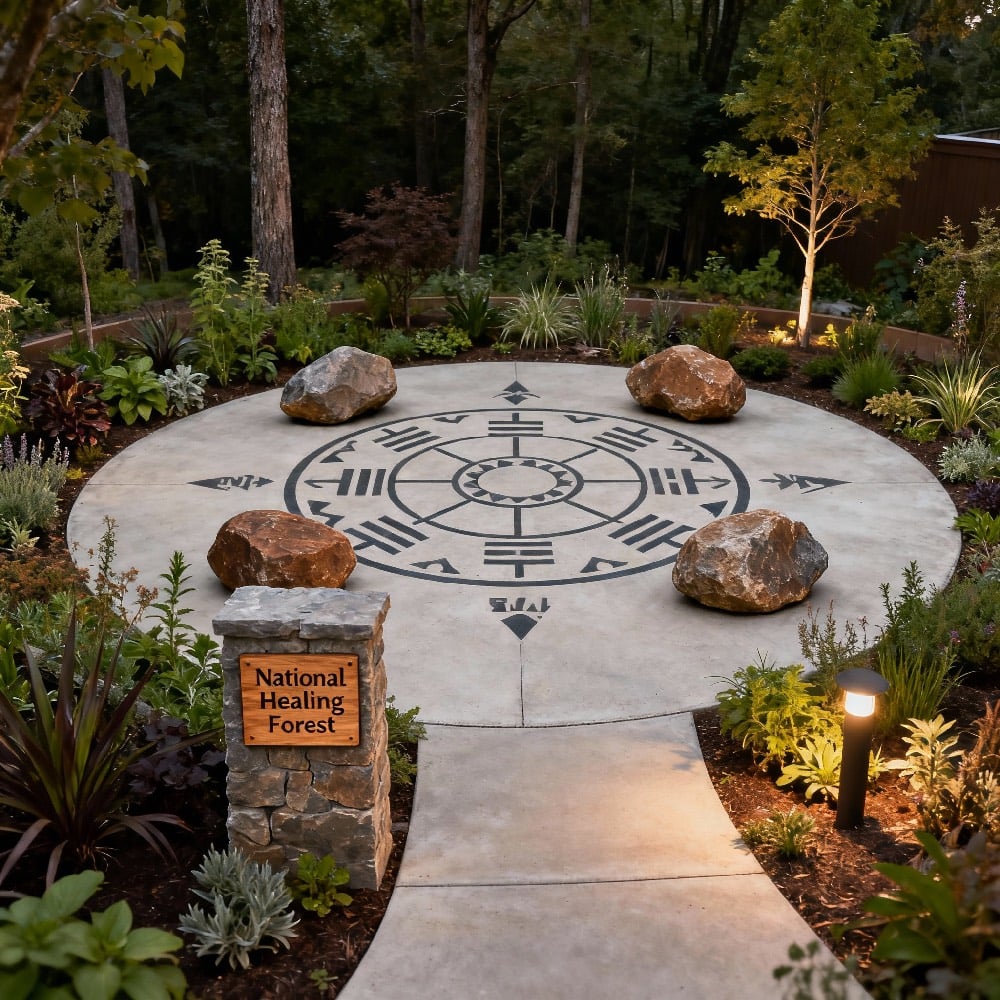
St. Mary’s Anglican Church in Navan is dedicating some of its property as space to create a healing garden to be constructed in the spring. And the project has been helped to move forward with recent news that the Anglican Foundation of Canada will provide a $10,000 grant.
Catalina Clifford, who has been leading the project, says the idea for the creating the garden was a response to the Truth and Reconciliation (TRC) Report’s Calls to Action and the National Healing Forest Initiative. It is intended to honor survivors of Indian Residential Schools and their families, missing and murdered Indigenous women and girls and 2SLGBTQQIA+ gender diverse people.
The garden will be a space for quiet reflection, healing and ceremony, and it will be a place to learn about medicinal plants and Indigenous teachings.
Clifford told Perspective that the plan for the garden is that its design will follow an Indigenous Medicine Wheel and will incorporate four boulders, one for each of the four directions and an art work by an Indigenous artist in the centre. It will include plants that are sacred in Indigenous cultures— sage, tobacco, cedar, and sweetgrass.
Clifford expressed her thanks to the Wabano Centre for Aboriginal Health, the Rev. Nancy Best from the United Church, and Jolene Commanda from Kitigan Zibi Anishinabeg for their guidance and advice.
Clifford also expressed her thanks to the Anglican Diocese of Ottawa for its contribution of a $5,000 Future Fund grant, as well as to the Anglican Foundation of Canada, the David Suzuki Foundation, and Waste Connections of Canada for their financial support.
Kathryn Fournier, co-chair of the diocesan All My Relations Episcopal Panel, said that “the Navan Healing Garden, as I understand it, is an initiative that comes out of consultation with Indigenous elders and knowledge-keepers and incorporates a holistic medicine wheel approach. The parish of St Mary’s in Navan has taken time to listen, learn and then act in order to establish this garden, and it could become a model for gestures of reconciliation across the Diocese. Not that every parish should consider a healing garden, that is not the point, but rather that parishes begin to contemplate how they might move beyond the preliminary steps of land acknowledgements and book study groups to actions that build relationships, demonstrate reciprocity and invite engagement.


Lift high the Cross